
If you’ve got an old couch in the garage, a pile of yard debris on the side of the house, or a rental packed with leftover junk, the first question is usually the same: how much does junk removal cost? The honest answer is that pricing depends on volume, labor, item type, and access. But that doesn’t mean it has to be confusing. A good junk removal company should be able to explain the price clearly, show you what you’re paying for, and handle the heavy lifting once you approve the quote.
For most customers, junk removal is less about buying truck space and more about buying time, labor, and relief. You’re paying to get the clutter gone without dragging it to the curb, renting a trailer, or making multiple dump runs yourself. That’s why two jobs that look similar on paper can have different prices in real life.
How much does junk removal cost on average?
Most junk removal jobs are priced by how much space your items take up in the truck. Small pickups can start around $100 to $150, especially for a few light items. Mid-size loads often land in the $200 to $400 range. Large cleanouts, full garage loads, furniture-heavy jobs, or property cleanups can run $500 and up.
That range is wide because junk removal is not a one-price-fits-all service. A single mattress in an easy-access driveway costs less than the same mattress hauled down from a third-floor apartment. A half truck of loose cardboard is different from a half truck of concrete chunks, soaked lumber, and old appliances. The truck space may be similar, but the labor, disposal costs, and handling are not.
The best way to think about pricing is this: volume sets the baseline, and the details of the job adjust the final number.
What affects junk removal pricing?
The biggest factor is volume. Most full-service hauling companies price by how much of the truck your junk fills. A few items may count as a minimum load. A garage cleanout might fill a quarter or half truck. A move-out, eviction, or warehouse cleanup could take a full truck or multiple loads.
Labor also matters. If the crew can back up to the pile and load everything in 15 minutes, that job will generally cost less than a removal that involves stairs, disassembly, tight hallways, elevators, or scattered debris across a property. Heavy lifting is part of the service, but some jobs are simply more time-intensive than others.
Then there’s the type of material. Household junk is usually straightforward. Appliances, mattresses, construction debris, dirt, concrete, hot tubs, sheds, and office furniture can involve added weight, extra disposal fees, or more labor. Some items need to be broken down before they can be hauled. Others need special recycling or handling.
Access can change the price too. If your items are in a garage, driveway, or front curb area, removal is faster. If they’re behind a locked gate, buried in a backyard, stacked in an attic, or left inside a packed rental unit, the crew will spend more time getting them out safely.
Volume-based pricing makes the most sense for most jobs
Customers often ask for a flat rate over the phone, but junk removal usually works better with volume-based pricing and an on-site quote. That’s not a dodge. It’s the most accurate way to price the job fairly.
Pictures can help, but they don’t always show weight, access, or how tightly the material is packed. A quote given too fast can go one of two ways: it gets inflated to protect the company, or it gets revised upward once the crew arrives. Neither feels good to the customer.
With volume-based pricing, you’re paying for the amount of truck space your job uses, plus the labor and disposal built into that service. If the company is doing it right, they’ll look at the load, explain the price before any work starts, and let you approve it on-site. That gives you clarity before a single item gets loaded.
Common price ranges by job type
Single-item pickups are usually the lowest-cost option, but they still have a minimum service price. Think couches, refrigerators, washers, dryers, or a mattress set. You’re still paying for a crew, a truck, travel time, loading, hauling, and disposal.
Furniture removal tends to stay affordable when the items are easy to access. A recliner from the curb is simpler than a sectional that needs to be carried down two flights of stairs. Appliance hauling can be similar, although refrigerators and some older units may cost more depending on local disposal rules.
Garage cleanouts, attic cleanouts, and storage unit cleanouts usually fall into the middle pricing range. These jobs are often a mix of boxes, broken furniture, old tools, and random clutter. The final cost depends on how much fills the truck and how long the sorting and loading take.
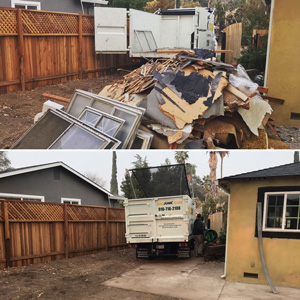
Larger property cleanouts are where pricing can climb fast. Estate cleanouts, eviction cleanouts, warehouse junk removal, and construction debris removal can require multiple workers, multiple loads, and significant site cleanup. Those jobs cost more, but they also save a huge amount of labor and downtime.
The cheapest option is not always the best value
If you’re comparing quotes, don’t look at the dollar amount alone. Ask what’s included.
Some companies quote low and then tack on extra charges for stairs, heavy items, labor time, disassembly, or cleanup. Others may offer curbside-only pricing, which means you do the hard part and they just pick it up. That might work for a few small items, but it’s not the same service as full-service junk removal.
A fair quote should make clear whether lifting, loading, hauling, disposal, and light sweep-up are included. If you’re hiring a crew because you don’t want to wrestle a sleeper sofa out of a hallway or clear out a rental after a tenant move-out, the real value is in having the job handled start to finish.
How to avoid hidden fees
The easiest way to avoid surprises is to ask direct questions before booking. Ask whether pricing is based on truck volume, item count, labor time, or a mix of all three. Ask whether there are added charges for stairs, appliances, mattresses, heavy debris, or distance from the truck.
It also helps to describe the job honestly. If there’s a steep driveway, a locked side yard, or a pile of broken tile mixed with lumber and dirt, say so upfront. Accurate information helps the company prepare the right crew and give you a realistic quote.
A reputable local operator should be comfortable walking you through the process. That includes how estimates work, when final pricing is approved, and what happens to the items after pickup. If part of the load can be donated or recycled, that can be a real advantage for customers who want responsible disposal, not just a dump run.
When DIY is cheaper – and when it isn’t
If you have a pickup truck, a free afternoon, and only a few light items, doing it yourself may cost less. That’s especially true if you already have help and the nearest disposal site is close by. For very small, easy jobs, DIY can make sense.
But the math changes once the job gets bigger, heavier, or messier. Dump fees, fuel, trailer rental, time off work, and the physical hassle add up fast. So does the risk of injuring yourself trying to move appliances, mattresses, desks, or construction debris.
For landlords, contractors, business owners, and property managers, speed matters just as much as cost. If clearing out the junk gets a unit ready faster, opens up warehouse space, or keeps a project on schedule, hiring a crew is often the better financial decision. That’s one reason companies like Sac Junk build pricing around full-service labor, not just hauling.
What a fair junk removal quote should feel like
You shouldn’t need to guess what you’re paying for. A fair quote should be straightforward, with no pressure and no vague language. The crew should arrive, take a look, give you a clear number, and start only after you approve it.
That matters whether you’re clearing one bulky item or dealing with a full property cleanup. The job is already a headache. The pricing shouldn’t be.
If you’re trying to budget for junk removal, the smartest move is to focus on value, not just the lowest number. Fast pickup, labor included, upfront pricing, and responsible disposal usually save more money and stress than a quote that looks cheap until the extras start showing up.
When the junk is taking up space, slowing down a move, or getting in the way of work, the right price is the one that gets it handled quickly, clearly, and without making you do the lifting.