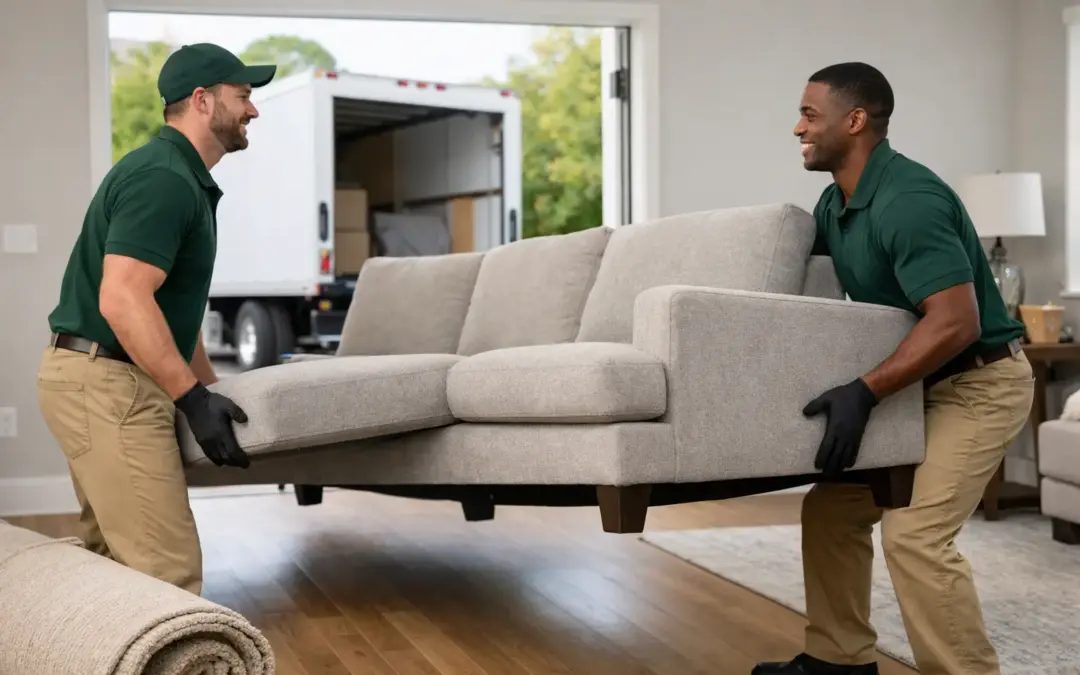
That sectional looked like a great idea when it went in. Now it is wedged in a corner, blocking your move-out, eating up floor space, or turning a rental turnover into a slow, sweaty project. If you are figuring out how to remove sectional couch pieces without damaging walls, straining your back, or wasting half a day, the job starts with one thing: breaking it down the right way.
A sectional is harder to remove than a standard sofa because it is built in connected pieces, often with hidden brackets, recliner hardware, or oversized frames that do not clear tight hallways easily. Some come apart in minutes. Others fight you the whole way. The difference usually comes down to layout, age, and whether the couch was assembled inside the room.
How to remove sectional couch pieces without damage
Before you pull, twist, or force anything through a doorway, clear the path. Move coffee tables, lamps, rugs, pet bowls, and anything else that can turn into a trip hazard. Measure the door opening, hallway width, stair clearance, and the biggest visible section of the couch. That quick check can save you from getting halfway out and realizing the angle will not work.
Next, remove anything loose. Take off the cushions, throw pillows, and detachable headrests. If the sectional has a sleeper component, remove the mattress if possible and secure the metal frame so it does not swing open while moving. Reclining sections need extra caution because the mechanism adds weight and creates pinch points.
Most sectionals connect with metal clips or brackets located underneath or between the sections. Lift the corner of one section and look along the seam where the pieces meet. In many models, one side slides up and off the connector. In others, the pieces need to be pulled straight apart. If it feels stuck, stop and inspect the connection instead of muscling it. Forcing it can bend the bracket, rip the fabric, or crack the frame.
Once the pieces are separated, move each section individually. Stand the piece on its end only if the frame feels solid and the shape allows it. Some sectionals are stable upright. Others, especially recliners, can tip fast. Wrap vulnerable corners with moving blankets or even thick towels if you are trying to protect walls and door trim.
Tools that make sectional couch removal easier
You do not always need a full moving kit, but a few basic tools help. Work gloves give you better grip and protect your hands from staples, brackets, and splinters. A flashlight helps when the connectors are buried underneath dark fabric. A screwdriver or drill can help if legs, arms, or back panels are removable. A dolly is useful on flat surfaces, but not every sectional balances well on one.
Sliders can help if the couch is still fully assembled and you need to reposition it before taking it apart. They are especially useful on hardwood and tile. On carpet, they are less reliable with heavier pieces. If the sectional is bulky and you are near stairs, another set of hands matters more than any tool.
This is where people often underestimate the job. A sectional may look soft, but the internal frame is usually hardwood, plywood, metal, or a mix of all three. Add a sleeper or recliner mechanism and one section can get heavy fast.
Common problems when removing a sectional
The biggest issue is assuming every sectional comes apart the same way. It does not. Some are clean modular designs with obvious hooks. Others are older, heavier units with buried hardware or sections that were practically built in place. If the couch came into the room before flooring, trim, or a door was installed, getting it back out can be tougher than expected.
Tight turns are another common problem. A piece may fit through the room door but fail at the hallway corner or the front entry. In two-story homes, stair landings can be the real bottleneck. You may need to rotate the section vertically, remove legs, or temporarily take a door off its hinges to gain enough clearance.
Then there is disposal. Even if you figure out how to remove sectional couch sections from the house, you still need a plan for where they go. Many cities do not allow bulky furniture to sit at the curb whenever you want. Landfills may charge by volume or weight, and not every donation center accepts large used sectionals, especially if they have stains, tears, pet damage, or broken frames.
When DIY removal makes sense and when it does not
If the sectional is in good shape, on a ground floor, and built in clean modular pieces, a DIY removal can be realistic. That is especially true if you have help, a truck, and enough space to stage the pieces outside. For a simple furniture swap, doing it yourself might be worth it.
But there are plenty of cases where DIY becomes more trouble than it saves. If the couch is upstairs, water damaged, infested, oversized, or part of a larger cleanout, the labor adds up quickly. The same goes for landlords between tenants, property managers on a turnover schedule, and contractors who need a space cleared without tying up their crew.
That is where full-service removal usually wins. You get the lifting, loading, hauling, and cleanup handled in one trip. You also avoid the risk of hurting yourself trying to drag a heavy corner section down a stairwell because it looked manageable at first.
How to remove a sectional couch for disposal
If the couch is headed for disposal, your goal changes a little. You are not preserving it for reuse, so you can focus on efficiency. Start by separating the sections. If legs, arms, or protruding hardware make the pieces awkward, remove those parts to reduce bulk. Keep screws and small hardware in a bag if you need to document parts for a property or estate cleanup.
Check your local bulky item rules before leaving anything at the curb. In the Sacramento area, pickup rules and scheduling can vary depending on the property type and trash provider. For apartment complexes, condos, and commercial properties, unauthorized dumping near bins can create lease issues, fines, or extra hauling charges.
If the sectional is still usable, donation may be possible, but condition matters. Clean, structurally sound pieces have a better chance than stained or broken ones. If not, recycling may apply to certain materials, though most people are not set up to separate upholstery, foam, wood, and metal efficiently on their own. That is one reason junk removal crews can save time – they handle the labor and sort materials for donation or recycling when possible.
Safety matters more than speed
People get hurt on furniture jobs because they rush the awkward part. The dangerous moments are usually not the heavy lift in the middle of the room. They happen at the threshold, on stairs, or when one person loses grip and the section shifts suddenly.
Lift with a partner whenever possible and talk through the route before moving. If one side is heavier, the stronger person should usually take the lower end on stairs. Watch fingers near metal brackets and reclining hardware. Do not let kids or pets move through the area while the couch is in motion.
If you start the job and realize the sectional is too heavy, too large, or too beat up to handle safely, stop there. A damaged couch is not worth a damaged back.
The fastest option when you need it gone now
For homeowners, renters, landlords, and business owners, the real issue usually is not just how to remove sectional couch sections. It is how to get the whole problem off the property fast. If you need the space cleared for a move, turnover, renovation, or cleanup, a full-service hauling crew is often the simplest answer.
A local company like Sac Junk can handle the lifting, loading, hauling, and cleanup without making you wrestle a sectional through a hallway or figure out disposal rules after the fact. That matters when time is tight and the couch is only one part of a bigger pile.
If your sectional still has life left in it, try to keep it intact and move it carefully. If it is done, be realistic about the labor involved. The best move is the one that gets the couch out safely, keeps your property in good shape, and lets you get on with the rest of the job.