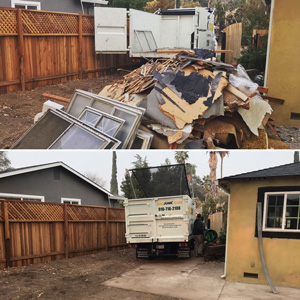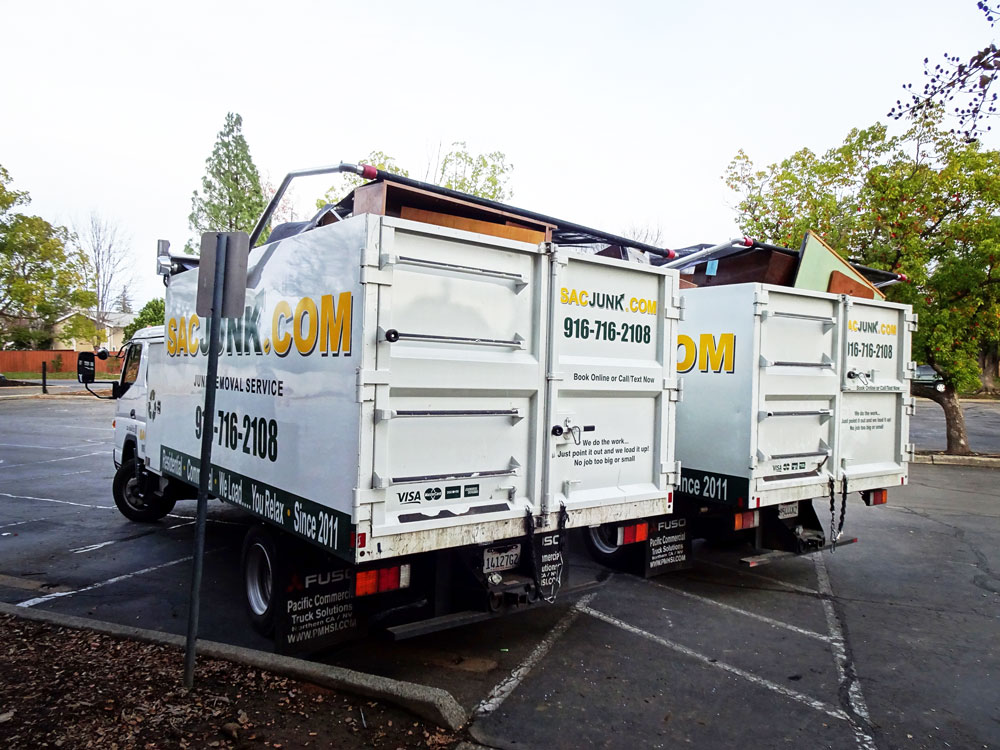

If you have an old couch, a garage full of boxes, and a pile of yard debris all headed out in the same pickup, you probably do not care what the landfill calls it. You care what it will cost to remove. That is where volume based junk pricing makes sense. Instead of charging by individual item or by the hour, the price is based on how much space your junk takes up in the truck.
For most customers, that model is easier to understand and easier to approve on-site. You can see the load, the crew can show you how much truck space it uses, and the quote stays tied to the actual amount removed. If you are a homeowner clearing a garage, a landlord handling a move-out, or a business cleaning out office furniture, that kind of pricing usually feels a lot more straightforward than guessing labor hours or counting every loose item one by one.
What volume based junk pricing actually means
Volume based junk pricing means your quote is built around the amount of truck space your items fill. A small pile may take up one-eighth of the truck. A larger cleanout may fill half, three-quarters, or the full truck. The more space your load uses, the higher the price.
That sounds simple because it is. It matches the real job in front of the crew. A mattress, broken shelving, old patio chairs, and bags of debris do not all weigh the same or break down the same way, but they all take up room. Truck volume gives customers a practical way to understand what they are paying for.
This is also why volume pricing works well for mixed loads. Most junk jobs are not neat, single-material pickups. They are a little bit of everything – furniture, cardboard, old appliances, yard waste, tenant leftovers, office junk, and random clutter that built up over time. Pricing by truck volume handles that without turning the estimate into a long argument over categories.
Why customers prefer volume based junk pricing
The biggest reason is transparency. When a crew arrives, they can look at the pile, estimate the portion of the truck it will fill, and give you a clear quote before loading starts. That makes approval easier because you are not buying a mystery service.
It also helps when the scope changes. Maybe you planned to remove a dresser and some boxes, then decided to add an old treadmill and broken patio set. With volume based junk pricing, the change is visible. More truck space used means a higher price. Less junk removed means a lower one. That is easier to follow than a pricing model built on vague labor adjustments.
There is also a fairness factor. Customers do not want to overpay for a small job just because a company has a minimum stop charge, and they do not want a simple cleanout to turn expensive because a crew takes longer than expected. Volume pricing keeps the focus on what is actually leaving the property.
What is usually included in the price
A good junk removal quote is not just about disposal. It should reflect the full service. In most professional volume-based jobs, the price includes labor, loading, hauling, and basic cleanup of the area once the junk is removed.
That matters more than people expect. A refrigerator in the garage is not hard because it is one item. It is hard because somebody has to maneuver it safely, load it, transport it, and dispose of it the right way. The same goes for broken furniture upstairs, office desks that need to be carried out in pieces, or piles of backyard debris spread across a fence line.
When the pricing is based on volume and the labor is included, customers can make a cleaner decision. You are paying to have the space cleared without doing the lifting yourself.
What can affect a volume-based quote
Truck space is the main factor, but it is not always the only one. That is the part worth understanding.
Weight can still matter
Some materials are heavy enough to affect disposal costs even if they do not take up much room. Dirt, concrete, brick, roofing material, and dense construction debris are common examples. A small load of heavy debris can cost more than a larger load of light household junk.
That does not mean the pricing is hidden. It just means volume and weight sometimes work together. A trustworthy crew should explain that clearly before loading.
Access affects labor
A curbside pile is faster than a third-floor apartment cleanout with narrow stairs. A warehouse with easy roll-up access is different from a backyard shed packed wall to wall. The junk may fill the same portion of the truck, but the labor required to get it out can be very different.
For that reason, some jobs with difficult access may price a little higher. That is normal. It is not about adding random fees. It is about the real time and physical work required.
Special items may carry added costs
Appliances with regulated components, certain electronics, tires, or large specialty items can involve separate recycling or handling fees. Again, the important thing is clarity. If an item needs a special disposal process, you should hear that up front, not after the truck is loaded.
When volume based junk pricing works best
This pricing model is especially useful for cleanouts where the exact item count is hard to pin down. Garage cleanouts, estate cleanouts, tenant move-outs, storage unit cleanouts, office furniture removal, and yard debris pickups all fit well.
It also works well when speed matters. If you need a crew out today or tomorrow, volume pricing makes the decision process faster. The team can assess the load, quote it on-site, and get to work without building a custom line-item invoice for every object.
In Sacramento, where customers often call because they are on a deadline – a property turnover, a sale, a renovation, an inspection, or a lease handoff – that speed matters. People are usually not shopping for a theory of pricing. They want the junk gone and the cost explained in plain English.
When another pricing model might make more sense
There are jobs where item-based pricing works fine. If you only need one couch removed or one appliance hauled away, a flat item price can be simple and predictable.
Hourly pricing can also make sense in rare cases, usually when the scope is unclear in a different way, like labor-heavy sorting or on-site reorganization. But for standard junk removal, hourly billing can make customers nervous. If the crew hits delays, the total climbs. Most people would rather know the price tied to the load than watch the clock.
That is why volume based junk pricing tends to be the better fit for full-service removal. It connects the quote to something visible and easy to verify.
How to get the most accurate quote
If you want pricing to go smoothly, show everything that needs to go before the quote is finalized. Hidden piles in the side yard, extra junk in the attic, or “maybe” items in the garage can change the truck volume quickly.
It also helps to group items together when possible. You do not need to stage the whole job, but making the load visible saves time and avoids confusion. If there are access issues, mention them early. Stairs, elevators, locked gates, tight alleys, and long carry distances all affect the job.
Photos can help for rough scheduling, but on-site quotes are still the most accurate. That is one reason many local operators, including Sac Junk, prefer to confirm pricing in person before removal starts. It protects both sides. You get a real quote based on the actual load, and the crew can plan the job correctly.
Why local companies often handle this better
Volume pricing only feels fair when the company is honest about the truck space used and consistent about how they measure it. That is where a local operator often has an edge. You are dealing with a crew that knows the area, handles the quote face to face, and relies on local reputation instead of franchise scripts.
That can show up in better communication, more flexible scheduling, and fewer pricing surprises. It can also show up in disposal practices. If reusable items can be donated and recyclables can be separated, less material goes to the landfill. For customers, that means the job gets done with less waste and less hassle.
Volume based junk pricing is not complicated once you see what it is built to do. It gives you a quote tied to the amount removed, not a vague guess, not a stopwatch, and not a long list of item charges that nobody wants to decode on the spot. If you are trying to clear space fast, that kind of pricing respects your time almost as much as it respects your budget.