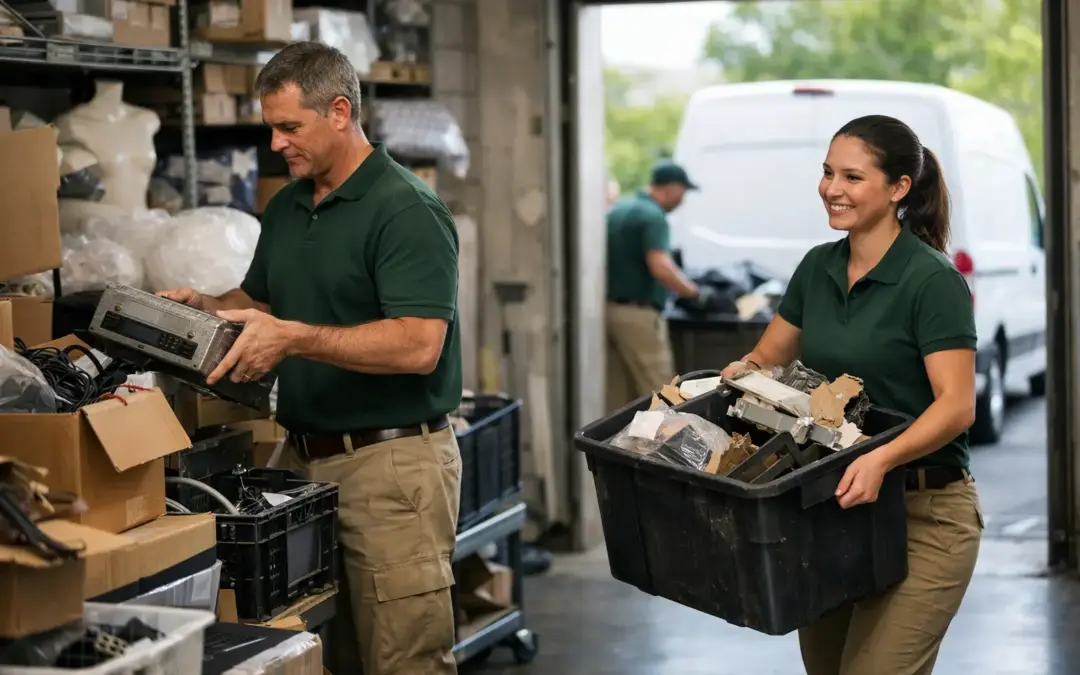
A retail backroom junk case usually starts small: a broken display gets set aside, old fixtures wait for a future remodel, and empty cartons pile up after a busy delivery week. Before long, the backroom is no longer supporting the sales floor. It is slowing down receiving, taking up inventory space, and creating a job nobody has time to tackle.
For Sacramento-area retailers, clearing out that space is not just about making things look better. A usable backroom helps your team receive product faster, locate supplies, stage online orders, and keep exits and work paths clear. When unwanted items are too heavy, bulky, or time-consuming to move, a full-service junk removal crew can handle the lifting, loading, hauling, and cleanup in one visit.
What a Retail Backroom Junk Case Looks Like
Retail backroom clutter is different from ordinary trash. It often includes large, awkward items that cannot go in a store dumpster and cannot sit safely behind receiving doors. A single unused gondola section may be manageable. The problem grows when it is surrounded by damaged shelving, old point-of-sale counters, mannequins, promotional signs, surplus furniture, and boxes of outdated materials.
The clearest sign that it is time to schedule removal is when staff has to work around the clutter instead of through the space. If deliveries are being staged in aisles, products are stacked where employees need to walk, or the team is spending paid time moving the same unwanted items from one corner to another, the backroom is costing more than a cleanout would.
Common non-hazardous items from a retail backroom include:
- Broken or unwanted shelving, racks, and display fixtures
- Old desks, chairs, filing cabinets, and breakroom furniture
- Cardboard, packaging, pallets, and non-hazardous warehouse debris
- Damaged merchandise that cannot be resold
- Outdated signage, seasonal displays, mannequins, and décor
- Small appliances, electronics, and office equipment that need proper handling
Every store is different. A boutique may need a few racks and fitting-room fixtures removed, while a larger retailer may need an entire stockroom cleared after a remodel or closure. The right scope depends on what needs to go, where it is located, and whether the store must stay open during the work.
Why Backroom Junk Becomes an Operations Problem
A cluttered backroom creates friction at the exact point where retail teams need speed. Deliveries arrive, employees need to break down boxes, and new inventory must reach the floor. When junk blocks that process, staff can lose valuable time sorting through obstacles and searching for usable supplies.
Safety is another concern. Heavy items leaning against walls, unstable stacks of cartons, and blocked pathways can lead to trips, strains, and preventable damage. Store managers also need to keep access routes, utility areas, and emergency exits clear. Even if the junk is not directly in the way today, it can become a problem quickly during a busy shipment, a seasonal reset, or an inspection.
There is also a customer-facing cost. A disorganized backroom often means the sales floor is restocked more slowly, online orders take longer to fulfill, and promotional changeovers become harder to complete on schedule. Customers may never see the backroom, but they feel its effects when the item they want is not available or when an employee cannot find it.
Decide What Stays Before the Crew Arrives
You do not need to organize every item before booking removal. That is one of the reasons businesses hire a hauling crew. But a quick decision about what stays, what goes, and what needs manager approval will make the appointment faster.
Start by separating active inventory from discarded merchandise. Make sure employees do not place sellable product, customer records, or equipment that is still in use in the removal area. If you have items that may be donated, set those aside and tell the crew. A responsible removal company can identify materials that may be suitable for donation or recycling rather than sending everything straight to the landfill.
For stores with sensitive information, pull paper records, employee documents, and customer data before the cleanout begins. Junk removal is not a substitute for secure document destruction. The same applies to hazardous materials. Paint, chemicals, fuels, certain batteries, and other regulated waste require specialized disposal and should be handled through the appropriate channel.
Plan the Cleanout Around Store Hours
The best time for removal depends on your store layout and daily traffic. If the backroom has a separate loading entrance, a crew may be able to work with minimal disruption during normal business hours. If removal requires moving large items through the sales floor, an early morning, evening, or slower business period may be the better choice.
Measure tight doorways and identify access points before the appointment if you are dealing with large counters, shelving units, or equipment. Let the removal team know about stairs, elevators, loading docks, parking limitations, or security check-in procedures. These details help the crew arrive prepared and keep the job moving.
A good cleanout plan should also account for deliveries. Avoid scheduling removal when a major truckload is expected, unless clearing space for that delivery is the urgent reason for the job. In that case, communicate the timing clearly so the crew can focus on the pathways and staging areas that matter most first.
How Full-Service Retail Junk Removal Works
With full-service removal, your staff does not need to drag fixtures to the curb or rent a dumpster that sits behind the building for days. You point out the unwanted items, receive an on-site quote, and approve the price before the work starts. The crew then does the physical work: lifting, loading, hauling, and sweeping up the removal area when finished.
Volume-based pricing is often a practical fit for retail backrooms because the load can include a mix of materials. You pay based on how much space the junk takes up in the truck, along with the labor needed for the job. The final price can vary when items are especially heavy, access is difficult, or the load requires additional disposal handling, so an on-site quote matters.
For a small pile of displays and boxes, a pickup can be quick. For a store reset, office area cleanout, or retail closure, it may involve multiple truck loads and a more coordinated schedule. Neither option requires your employees to lose a day to hauling, loading, and disposal runs.
Recycling and Donation Make a Difference
Retail cleanouts can generate a surprising amount of reusable material. Metal fixtures, cardboard, certain electronics, usable office furniture, and intact display pieces may have a better next stop than a landfill. Not every item can be donated or recycled, and condition always matters, but sorting materials responsibly is still worth the effort.
Sac Junk works to donate and recycle up to 60% of the materials it removes when possible. That approach can be especially useful for retailers replacing fixtures, refreshing office furniture, or clearing usable items after a relocation. It keeps the job practical while reducing unnecessary waste.
Keep the Backroom From Filling Up Again
Once the space is clear, assign a defined area for cardboard, returns, damaged goods, and future fixture storage. Without clear zones, a clean backroom can become a dumping ground again within a few delivery cycles. A simple rule helps: if an item has no active use, no assigned storage spot, and no planned pickup date, it should not stay in the backroom.
For high-turnover stores, schedule periodic removal around seasonal resets, inventory changes, or remodels. Regular small cleanouts are often easier to manage than waiting for a full-scale pileup. They also give your team the room to work safely when business gets busy.
A clear backroom gives your store more than extra square footage. It gives your employees room to receive, stock, fulfill, and move without fighting yesterday’s junk. When the pile has outgrown your team’s time or muscle, get it removed and put that space back to work.