A foreclosed property can go sideways fast. One week it looks manageable, and the next you are dealing with abandoned furniture, spoiled food, broken appliances, yard overgrowth, and a deadline to get the place secured, cleaned, and ready for the next step. This foreclosure cleanout guide is built for owners, investors, agents, and property managers who need the job done quickly without making expensive mistakes.
What a foreclosure cleanout guide should help you avoid
The biggest mistake in a foreclosure cleanup is treating it like a basic junk pickup. Sometimes it is that simple, but often it is not. Foreclosed homes can come with legal holdovers, personal property questions, biohazard concerns, pest issues, utility shutoff problems, and damage that only becomes obvious once the clutter is out.
A good cleanout starts with the right order of operations. If you haul everything out before documenting conditions, you can create disputes. If you start repairs before the property is fully cleared, contractors lose time and work around junk. If you wait too long, the property keeps deteriorating and the carrying costs stack up.
That is why speed matters, but so does sequence.
Start with possession, access, and documentation
Before anyone loads a single item, confirm you have legal possession and the right to remove contents. That sounds obvious, but foreclosure timelines are not always clean. Occupancy status may be unclear, and personal property rules can vary depending on the situation. If there is any uncertainty, get that resolved first.
Once access is confirmed, document the property as-is. Walk every room, garage, attic, crawl space, side yard, and backyard. Take clear photos and notes of what is present, especially anything that looks valuable, sensitive, or potentially regulated. Safes, paperwork, family photos, electronics, tools, and vehicles should never be treated like obvious trash without a closer look.
This step protects you on both cost and liability. It also helps you build a real scope of work instead of guessing from the front door.
Separate trash, salvage, and problem materials
Most foreclosure properties contain a mix of everything. Some items are straight junk. Some can be donated or recycled. Some need special handling and should not go with a standard non-hazardous load.
That distinction matters because disposal costs, labor time, and scheduling all change depending on the material. A garage full of old boxes and broken chairs is one thing. Paint cans, chemicals, propane tanks, needles, wet mattresses, moldy drywall, and a refrigerator full of spoiled food are another.
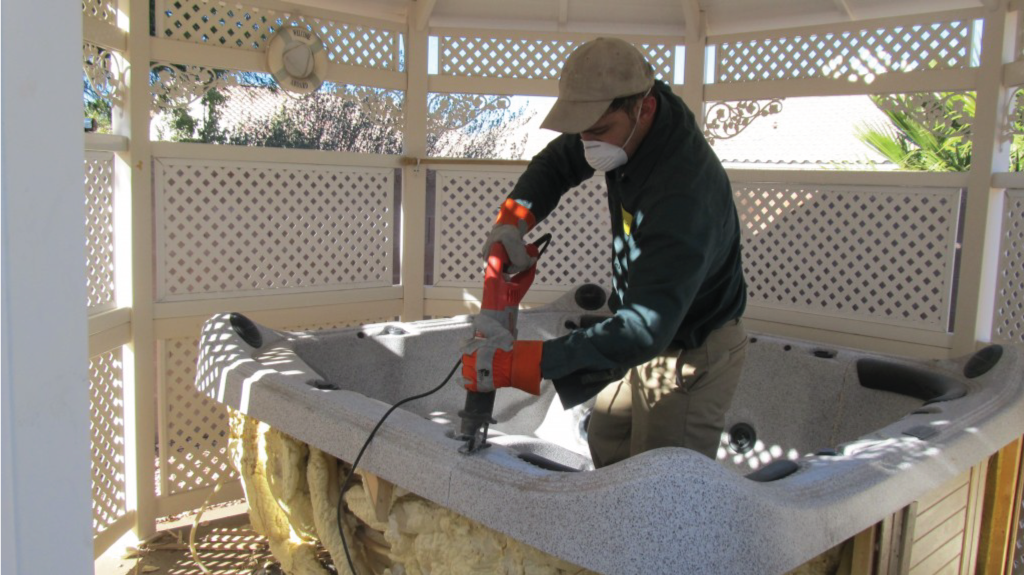
A practical foreclosure cleanout guide has to say this clearly: not every item should be touched by a general junk crew. If hazardous or biohazard materials are present, stop and route that portion of the work to the proper provider. It is cheaper to separate the job correctly than to create a safety issue or disposal violation.
For everything else, think in three buckets. Keep what must be retained for legal or ownership reasons. Remove what can be donated or recycled when feasible. Haul away the true junk so the property can be assessed and turned over.
Build the cleanout around the turnover plan
The cleanout should match the property goal. Are you listing it as-is, preparing it for a rental turn, or sending in a rehab crew for a full renovation? The answer changes how aggressive the cleanup needs to be.
If the property is headed for market quickly, the goal is usually clear access, remove debris, improve appearance, and eliminate anything that drags down showings. If it is becoming a rental, you may need a tighter turnover standard with appliance removal, garage clearing, exterior cleanup, and a final sweep so repair vendors can move straight in. If it is a heavy rehab, you may focus on fast bulk removal first, then follow with demolition debris as the project moves forward.
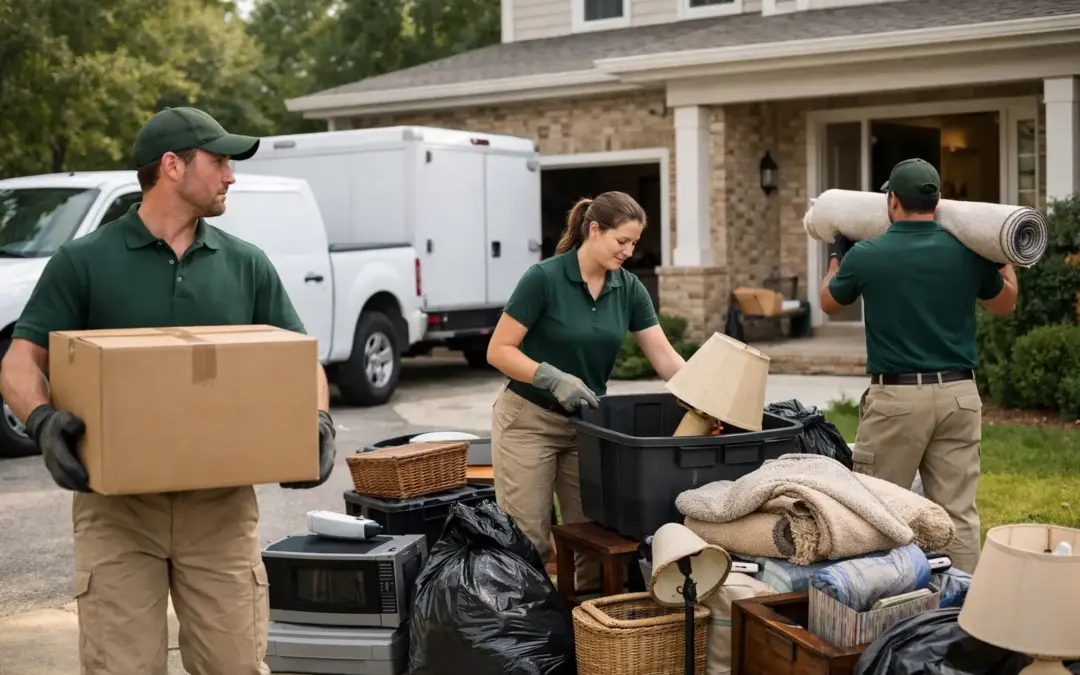
This is where a full-service crew helps. Labor-inclusive hauling saves time because the same team can do the lifting, loading, and general site cleanup without you trying to coordinate multiple people for a basic clear-out.
Prioritize the areas that slow everyone else down
Not all parts of the property have equal impact. Kitchens, bathrooms, entry points, garages, and yards tend to affect security, sanitation, and contractor access the most. Clear those first.
Kitchens often hide the worst surprises. Old food, dead appliances, leaks, insects, and broken cabinets can turn a simple haul into a sanitation issue. Bathrooms may contain damaged fixtures, standing water, or materials that need separate disposal. Garages and sheds usually hold the heaviest loads, from shelving and tires to leftover renovation materials and bulky junk.
Outside matters too. Overgrown yards, dumped debris, and side-yard clutter make a property look vacant and neglected. That can attract more dumping, trespassing, or vandalism. A quick exterior cleanup is often one of the cheapest ways to protect the property while improving curb appeal.
Price the job realistically
Foreclosure cleanouts are rarely priced well by guesswork. Volume matters, but so do access conditions, labor intensity, item weight, stairs, distance to the truck, and whether crews need to sort usable items from straight trash.
That is why on-site quotes tend to be more accurate than rough phone estimates for this kind of work. A property with two bedrooms of visible junk may also have a packed attic, a shed full of debris, and a fenced yard with broken concrete hidden in the back. The price changes once the real scope is seen.
Transparent pricing helps you make decisions quickly. You want to know what the crew will take, how they charge, whether labor is included, and what falls outside standard non-hazardous junk removal. Cheap sounding quotes often get expensive later when extra labor, surprise items, or disposal restrictions show up.
Plan for donation and recycling when it makes sense
Not every foreclosed property has reusable contents, but some do. Furniture, appliances, metal, and household goods may be recoverable depending on condition. Responsible diversion matters for two reasons. First, it can reduce landfill waste. Second, it can keep disposal more efficient when materials are sorted the right way.
That said, this is one of those it-depends situations. Donation sorting takes time. If the property is contaminated, smoke-damaged, pest-affected, or heavily soiled, salvage options shrink fast. In those cases, speed and safety usually matter more than trying to save every item.
A local operator with established hauling and disposal routines can usually tell quickly what is worth separating and what needs to go.
Know when the job is not just a junk job
Some foreclosure properties need more than removal. They need lock changes, board-up work, deep cleaning, pest control, landscaping, pressure washing, or demolition. The cleanout is still the first move because it exposes the true condition of the property, but it may only be one phase.
That is why the best approach is not just booking a truck. It is scheduling the cleanout so the next vendor can start right away. When the hauling crew finishes and the site is swept, your cleaner, handyman, painter, or contractor should be able to walk in without delay.
In Sacramento and surrounding areas, that timing can matter a lot. Holding a distressed property for extra days while you wait on access, cleanup, and follow-up trades costs money fast.
Choosing the right crew for a foreclosure cleanout
You want a crew that shows up on time, handles the lifting, gives an upfront quote on site, and understands that this is an operations problem, not a weekend decluttering project. Foreclosure work is often time-sensitive and physically demanding. The right crew should be able to clear rooms, garages, outdoor areas, and bulky items without turning the process into more management work for you.
Look for straightforward service terms. Ask whether they remove furniture, appliances, bagged trash, yard debris, and general household junk. Ask what they will not take. Ask whether they sweep up after loading. Ask how fast they can schedule the job.
If you are managing multiple units or scattered properties, consistency matters as much as price. A local company like Sac Junk can be easier to work with than a call-center model because you are dealing with people who know the area, understand the urgency, and are accountable for the result.
Final thought
A foreclosure cleanout goes smoother when you treat it like a turnover job, not just a dump run. Get legal access confirmed, document the condition, separate out problem materials, and use a crew that can clear the property fast with no hidden labor surprises. Once the junk is gone, the path forward gets a whole lot clearer.