That old couch in the garage, the busted desk at the office, the pile of yard debris behind the fence – none of it leaves on its own. If you’re trying to figure out how to schedule junk pickup, the fastest path is usually simpler than people expect. You do not need to bag everything, drag heavy items to the curb, or spend half a day calling around if you know what information to have ready and what to ask before you book.
How to Schedule Junk Pickup Without Wasting Time
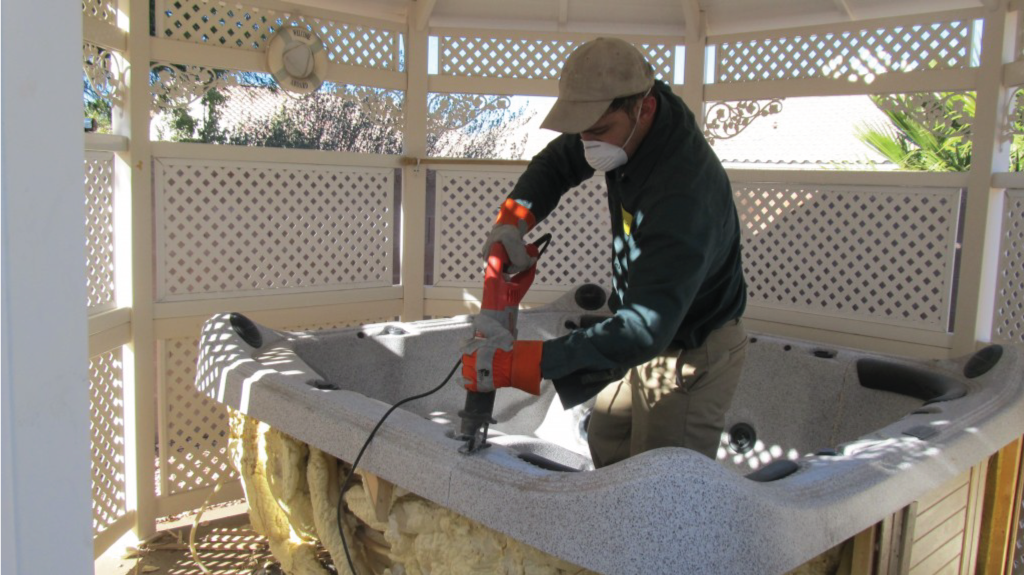
The first step is knowing what needs to go. That sounds obvious, but it matters because junk removal companies price and schedule jobs based on volume, labor, item type, and access. A few boxes in a garage is a different job than a hot tub tear-out, a warehouse cleanout, or a mattress pickup from a third-floor apartment.
Before you call or book online, take five minutes to walk the area. Count the large items, estimate how much space the load takes up, and note anything that will affect labor. Stairs, narrow hallways, locked gates, detached sheds, and heavy appliances all change the job. If you can send photos, even better. Clear photos help the company give you a more accurate expectation and bring the right crew size.
Just as important, separate what is actually junk from what you may want to keep, donate, or move somewhere else on the property. Customers lose time when the crew arrives and half the pile is still undecided. A clean decision upfront makes pickup faster and keeps your quote cleaner too.
What Information to Have Ready When Booking
When people ask how to schedule junk pickup, they usually focus on the date. The date matters, but the details matter more. A good booking goes smoother when you can answer a few basic questions right away.
Start with the item list. You do not need a perfect inventory, but be specific. Say “two recliners, one queen mattress, a broken dresser, and about ten contractor bags” instead of “some stuff.” If the load includes appliances, electronics, construction debris, or outdoor waste, mention that early. Some items need special handling, and some non-hazardous items are accepted while hazardous materials are not.
Next, explain where the junk is located. Is it in a garage, curbside, upstairs bedroom, backyard, office suite, storage unit, or warehouse? Accessibility affects both timing and labor. Full-service crews can remove items from almost anywhere on the property, but they need to know what they’re walking into.
Then confirm timing. If you need same-day pickup, say that immediately. If you are coordinating around a tenant turnover, contractor schedule, real estate closing, or office move, mention your deadline. The more direct you are, the easier it is for the company to tell you what is realistic.
Finally, ask how pricing works. Most full-service junk removal companies charge by volume, with labor included. That is often the easiest setup for customers because you are paying to make the problem disappear, not just renting truck space and doing the work yourself.
Choose the Right Type of Pickup
Not every junk job should be booked the same way. If you only have one or two items, a single-item pickup may be the fastest and most affordable option. If you are clearing out a rental after a move-out, an estate, a garage, or a job site, you probably need a larger cleanout appointment with enough truck space and crew time to finish in one trip.
Commercial customers should be especially clear about scope. Office furniture, cubicles, warehouse debris, retail fixtures, and property cleanup often require more planning than a standard household pickup. The upside is that a good hauling crew can remove bulky material quickly without tying up your staff.
There is also a trade-off between speed and flexibility. Same-day service is great when you need the junk gone now, but if your job is large or access is complicated, booking a specific window a day or two ahead may give you a smoother experience. Fast is valuable, but a properly scoped job is what prevents delays.
Ask These Questions Before You Confirm
A junk pickup should feel straightforward. If it does not, ask more questions before you book. You want to know whether the crew does all lifting and loading, whether there is an on-site quote before work begins, and whether cleanup is included after the items are removed.
You should also ask what they do with usable items. Some companies make donation and recycling part of the job, which is worth knowing if you care about keeping reusable material out of the landfill. That is especially relevant for furniture, appliances, metal, yard waste, and general household goods.
It also helps to confirm arrival communication. A courtesy call or heads-up before the crew arrives makes the day easier, especially for landlords, property managers, and business owners who may not be sitting onsite all morning.
If price transparency matters to you, ask how overages are handled. For example, what happens if the load is larger than expected when the crew arrives? A professional company should explain that clearly before anything gets loaded.
How to Prepare for Pickup Day
Once your appointment is scheduled, your job is mainly to make access easy. You should not have to do the heavy lifting, but a little prep helps the crew move faster.
Make sure the junk is identifiable. If there is any chance of confusion, mark the items or group them together. This matters in garages, shared commercial spaces, apartment complexes, and properties with mixed storage. The last thing anyone wants is a debate over what was supposed to stay.
Clear a path if possible. Move cars out of the driveway, unlock gates, secure pets, and let the company know about any parking restrictions. If you are not going to be there in person, give clear instructions ahead of time. For rental properties and commercial jobs, access codes and onsite contacts should be confirmed before the crew is en route.
You should also set aside anything that is not going. Paperwork, family keepsakes, tools, chargers, and small valuables have a way of hiding in junk piles. Full-service crews work fast, which is great for getting the space cleared, but it means final sorting should happen before arrival.
What to Expect From the Quote and Removal Process
For most jobs, the crew arrives, looks at what needs to go, and gives you a quote based on how much truck space the load will take and how much labor is involved. You approve the price before the work starts. That part matters because nobody likes hidden fees showing up after the truck is full.
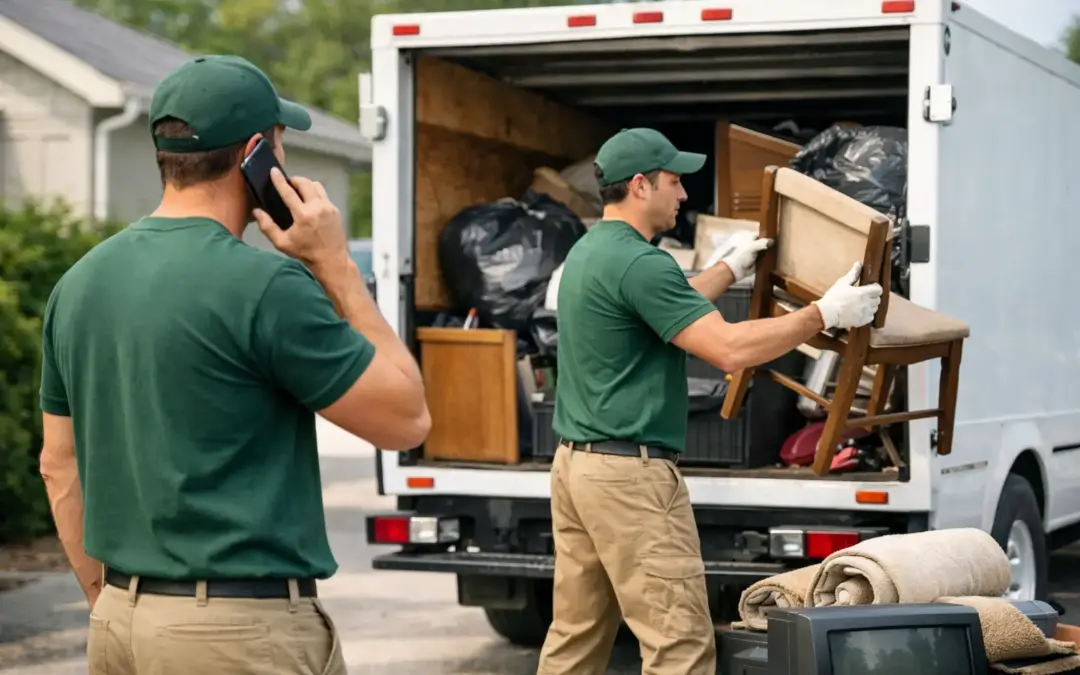
If the quote works for you, the crew gets to it. A good team handles the lifting, loading, hauling, and a basic sweep-up of the area when they finish. That is the value of full-service junk removal. You are not paying to watch a truck sit there while you do the hard part.
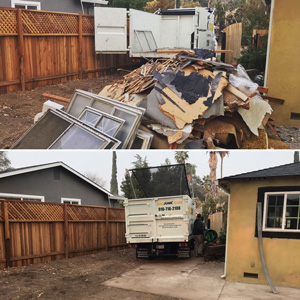
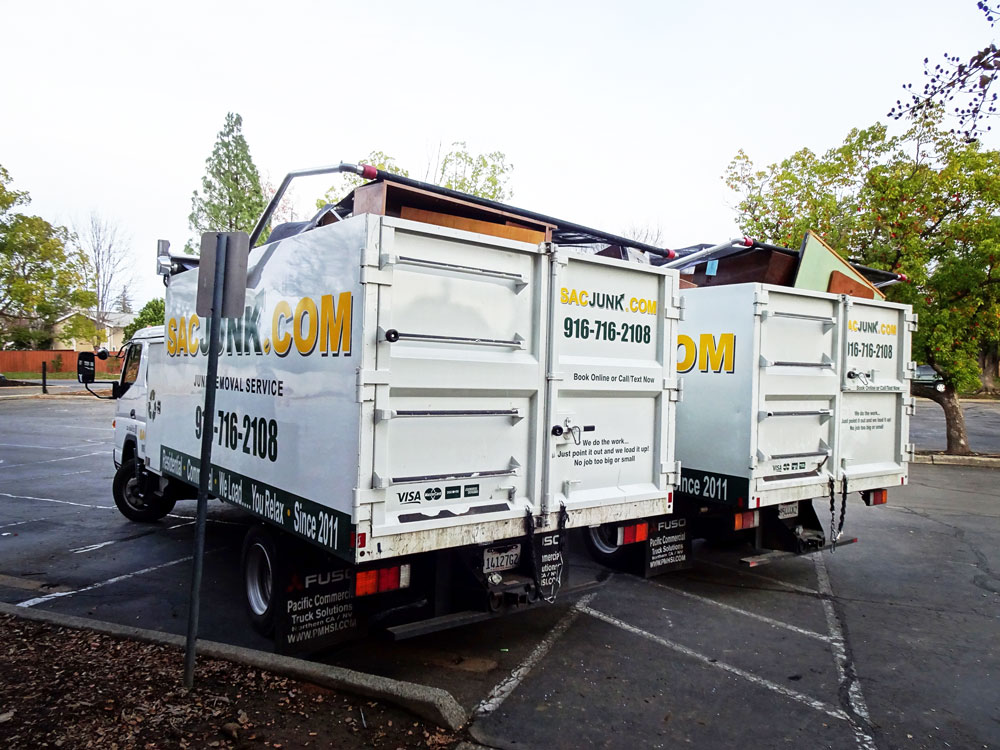
In Sacramento, that kind of service is especially useful for move-outs, landlord turnovers, garage cleanouts, yard cleanup, and office furniture removal where time is tight and access can be awkward. A locally operated company like Sac Junk can usually move faster and communicate more directly than a call-center-style operation.
Common Mistakes That Slow Down Junk Pickup
The biggest mistake is under-describing the job. If you book for “a few items” and it turns out to be half a garage plus a shed, scheduling gets harder and pricing changes. Be upfront from the start.
Another common issue is waiting too long to book. If you know you have a tenant move-out, renovation deadline, or bulk trash problem coming up, get on the schedule early. Even if you still need a little flexibility, locking in a window gives you better odds of getting the day you want.
People also assume all junk can go. It cannot. Hazardous waste, chemicals, paint, and certain regulated materials often require a different disposal route. Ask first instead of finding out at the last minute.
When Professional Pickup Beats DIY Hauling
If the load is light and you already have a truck, a dump run might be fine. But once you are dealing with bulky furniture, appliances, mattresses, yard waste, construction debris, or a full cleanout, DIY hauling gets expensive fast in time, labor, dump fees, and sore backs.
Professional pickup usually makes more sense when the junk is heavy, access is difficult, or the deadline is tight. It also makes sense when you want one price that covers loading and hauling instead of piecing the job together yourself.
The easiest way to handle clutter is to treat it like any other job – define the scope, book the right crew, and let the work get done. When you know how to schedule junk pickup the right way, you spend less time managing the mess and more time getting your space back.