An office move-out can turn into a deadline problem fast. The lease is ending, new furniture is arriving, or a tenant needs the suite cleared before the next crew comes in. If you need to remove office cubicles quickly, the fastest route is not simply taking them apart. It is planning the teardown, access, hauling, and disposal before the first panel comes down.
Cubicles are bulky, awkward, and often more connected than they look. Panels may contain power poles, data cabling, overhead storage, work surfaces, drawers, glass, and heavy metal bases. A rushed removal without a clear plan can damage walls, elevators, flooring, or equipment that still needs to stay. A well-run removal keeps the job moving while protecting the building and getting the space ready for what is next.
Start With the Turnover Deadline
Before scheduling labor or a hauling crew, confirm exactly when the office must be empty. Ask your property manager whether the building has loading-dock rules, elevator reservations, approved work hours, parking restrictions, or certificate-of-insurance requirements. These details can decide whether a cubicle removal takes one efficient day or stretches into several frustrating trips.
Measure the space and estimate how many workstations are involved. A simple cubicle can be a few panels and a desk surface. A larger system may include dozens of connected panels, powered components, storage towers, and separate meeting stations. Take clear photos of the floor, cubicle layout, hallways, exits, and loading area. Those photos help a removal company prepare the right crew size, truck space, and tools before arriving.
Also decide what is actually leaving. Many office cleanouts include more than cubicles: chairs, filing cabinets, desks, monitors, printers, breakroom furniture, carpet scraps, and boxed materials often pile up at the same time. Combining the removal into one pickup is usually faster than arranging separate disposal runs.
Disconnect Power and Data Before Teardown
Never treat a powered cubicle system like ordinary furniture. Some systems have electrical raceways built into the panels, while others are connected through floor outlets, wall outlets, or ceiling feeds. IT cabling may run through the frames as well.
Have qualified building maintenance staff, an electrician, or your IT team identify and disconnect live electrical and data connections before removal begins. Label anything that must be reused, such as network equipment, access points, or specialty cables. If the business is relocating, pack computers, hard drives, files, and confidential records separately before the cubicle crew starts work.
This step prevents avoidable downtime and reduces the chance that a panel is moved while still attached to a live connection. It also helps separate reusable components from material that can be hauled away.
Make a Clear Keep, Sell, Donate, or Haul Plan
The quickest office cleanout is organized at the source. Do not let workers guess which furniture is staying, which items are being transferred, and which materials are ready for disposal. Mark items clearly with simple signs or colored tape before teardown begins.
Cubicles in good condition may have resale or donation value, but this depends on their age, style, quantity, and local demand. Older systems, custom configurations, damaged panels, and incomplete workstations can be difficult to sell quickly. Waiting weeks for a buyer can cost more in rent, labor, and delayed turnover than the furniture is worth.
A practical approach is to preserve clearly valuable items, donate usable pieces when accepted, and schedule hauling for the rest. A full-service removal crew can load the unwanted cubicles, furniture, and office debris at once, then sort materials for recycling or donation when possible. That keeps usable materials out of the landfill without holding up your move-out date.
How to Remove Office Cubicles Quickly Without Damage
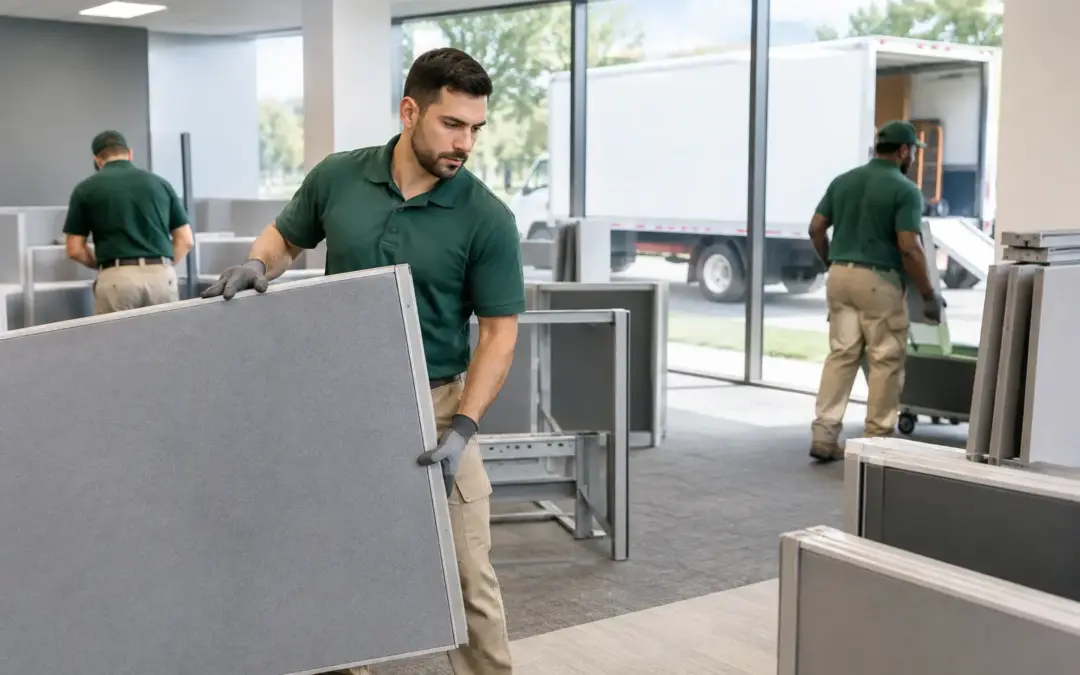
Speed comes from removing cubicles in the right order. Start by clearing every workstation of personal property, files, electronics, and loose supplies. Then remove detachable items such as monitor arms, keyboard trays, overhead bins, drawers, and work surfaces. These pieces are easier to carry once separated and less likely to fall during panel removal.
Next, take down panels one section at a time. Most systems connect through top caps, brackets, clips, or shared posts. Keep fasteners with the components only if the system will be reinstalled or sold. If everything is being removed for disposal, the priority is safe, controlled breakdown and efficient loading.
The large panels should be carried upright whenever practical, especially through narrow hallways and elevator doors. Avoid dragging metal feet across finished floors or leaning panels against drywall. Use dollies, panel carts, moving blankets, and floor protection where needed. Heavy storage units and lateral filing cabinets require extra care because their weight can shift unexpectedly.
Do not stack loose panels in fire exits, common hallways, or loading areas while waiting for the truck. Create a designated staging area that does not block access. A clean path from the office to the truck saves time on every trip and helps prevent injuries.
Choose Full-Service Hauling When Time Matters
A do-it-yourself cubicle removal can look cheaper until the real work starts. You need people who can lift safely, tools for disassembly, a truck large enough for bulky panels, a place to dispose of the materials, and time to make multiple trips. You may also need to coordinate building access and cleanup after the furniture is gone.
Full-service cubicle removal handles the physical work in one coordinated job. The crew arrives, reviews the items, provides an on-site quote, disassembles and loads the cubicles, hauls them away, and sweeps up the work area. Pricing is commonly based on the amount of truck space used, with labor and loading included. That gives office managers and property teams a clearer cost than trying to piece together labor, truck rental, fuel, disposal fees, and employee overtime.
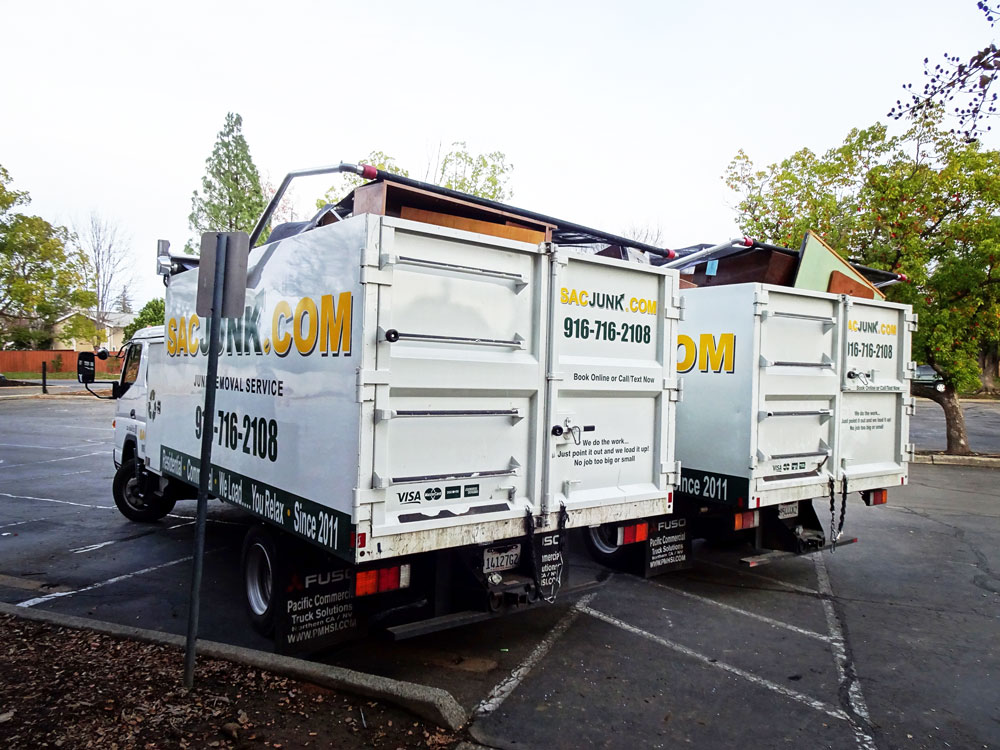
For Sacramento offices, Sac Junk can remove cubicles along with the rest of the unwanted office furniture and debris. A local hauling crew is particularly useful when the deadline is close and you need one point of contact for lifting, loading, hauling, and site cleanup.
Protect the Building and Your People
Cubicle panels can have sharp edges, broken glass, exposed brackets, and hidden weight. The safest jobs use enough workers to control larger pieces rather than asking one person to wrestle a panel through a doorway. Wear appropriate gloves and closed-toe work shoes, and keep visitors and employees out of the active teardown area.
Check the path from the office to the truck before work begins. Protect lobby flooring and elevator interiors if required by the building. Pad door frames, reserve the freight elevator, and make sure the truck can park close enough to avoid long carries. These details are not glamorous, but they are often what keep a fast job from becoming an expensive damage claim.
If the office is still operating during the removal, isolate the work zone and schedule noisy disassembly around calls, meetings, or customer traffic. In some cases, an evening or weekend removal is worth it to keep the business running normally.
Avoid the Delays That Slow Down Office Cleanouts
Most cubicle removal delays come from uncertainty, not the actual lifting. The crew arrives and finds that power is still connected, the freight elevator was not reserved, employees have not cleared their desks, or the loading dock is unavailable. Each problem creates waiting time that can disrupt the whole schedule.
Confirm access, disconnections, parking, and the removal list the day before the job. Assign one person who can make decisions on-site if questions come up. If there are items that must not be removed, move them to a separate room or label them clearly. A few minutes of preparation can save hours of sorting and backtracking.
The best time to schedule removal is before the office becomes a pile of mixed furniture, boxes, and trash. Clear cubicles while pathways are still open, then let cleaners, painters, flooring installers, or new furniture crews move into an empty space.
A fast office turnover does not require your staff to spend a weekend hauling panels and making dump runs. Get the plan in place, clear the access route, and put experienced hands on the heavy work so the space can be ready for its next use.