
A renovation cleanup example is easy to picture: the new flooring is down, the paint is dry, and the room finally looks right – except for the broken cabinets, packaging, dusty drop cloths, tile scraps, and old fixtures stacked in the garage. The renovation may be finished, but the job site is not. Clearing that leftover material quickly protects the finished space, gives you room to move back in, and keeps a small pile from turning into a weeks-long project.
For homeowners, landlords, and contractors around Sacramento, renovation cleanup is usually less about finding a place for one bag of trash and more about handling a mixed load safely. That is where a full-service junk removal crew can save real time. You point out what goes, approve the price, and the crew handles the lifting, loading, hauling, and sweep-up.
A Realistic Renovation Cleanup Example
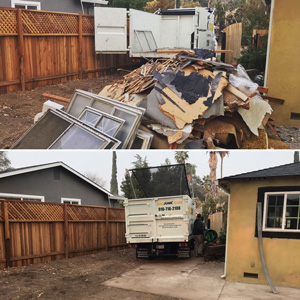
Consider a typical kitchen refresh in a Sacramento rental home. The work included replacing lower cabinets, countertops, a dishwasher, a range hood, and worn vinyl flooring. The contractor completed the installation, but the property owner was left with a garage full of old materials and a side-yard pile that needed to be cleared before the next tenant moved in.
The cleanup load included old cabinet boxes and doors, countertop pieces, the old dishwasher, a damaged range hood, flooring offcuts, cardboard appliance packaging, paint cans that were empty and dry, wood trim, broken shelving, and several bags of general job-site debris. There was also an old microwave and a few pieces of furniture moved out of the kitchen to make room for the work.
This is a common situation because renovation debris rarely comes in one clean category. A homeowner may be able to fit a few boxes into curbside bins over several weeks, but appliances, cabinets, bulky construction debris, and heavy flooring are another matter. Leaving it outside can create a safety issue, block access, and make the property look unfinished.
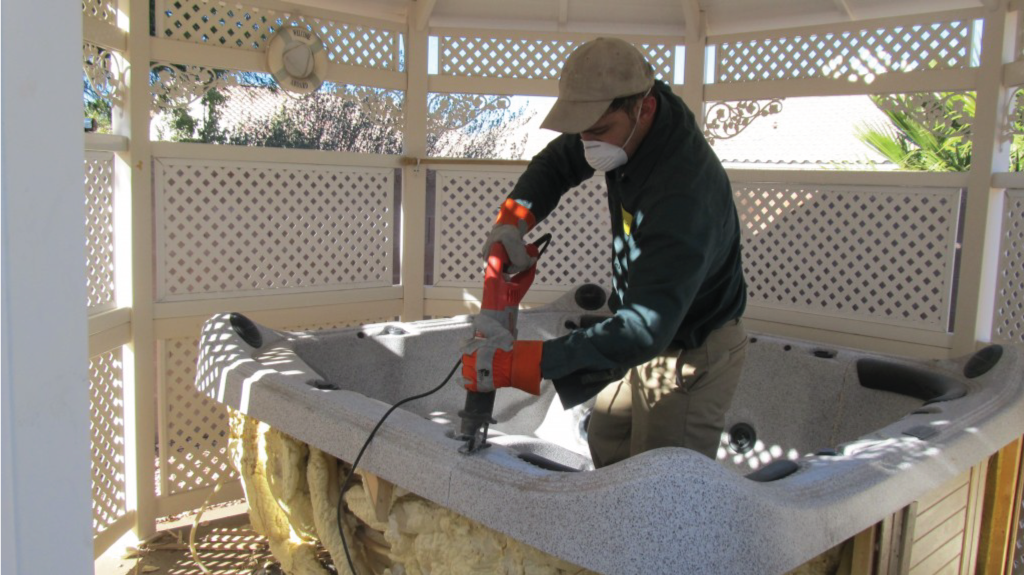
A junk removal crew would first confirm exactly what is being removed and provide an on-site quote based on the volume of space the load takes up in the truck. Once approved, the crew separates manageable recyclable or donatable items where possible, loads the debris, and clears the work area. The owner gets a usable garage again without making repeated dump runs or lifting awkward, sharp, and heavy materials.
What Usually Belongs in a Renovation Cleanup Load
Every project is different, but most post-renovation pickups include a combination of removed fixtures, construction leftovers, and items displaced during the work. Common examples include cabinets, vanities, doors, carpet, flooring, drywall pieces, lumber, trim, countertops, sinks, toilets, light fixtures, shelving, and appliance packaging.
Old appliances and furniture often get overlooked until the end. A renovation can expose the fact that an outdated refrigerator, broken washer, sagging couch, or unused dining set no longer has a place in the home. Adding those items to a scheduled pickup is often more practical than moving them from room to room while trying to finish the project.
Yard and exterior renovation debris can be included too. Fence panels, deck boards, old planters, patio furniture, landscape timbers, and torn-out irrigation materials can take up a surprising amount of space. The key is to describe the full job before the crew arrives so the pickup can be planned correctly.
Not everything belongs in a standard junk load. Hazardous materials, including chemicals, fuels, wet paint, certain solvents, and other regulated waste, require specialized disposal. If you are unsure about an item, ask before booking rather than mixing it into the pile.
The Right Cleanup Order Prevents Extra Work
The best time to plan removal is before the last day of renovation, not after debris has spread through the garage, driveway, and yard. A little preparation keeps the final cleanup from holding up painters, installers, tenants, or move-in plans.
Start by separating items that are staying from items that are definitely leaving. If a box is headed back into the house, move it away from the debris pile. If an old fixture is being saved for resale or reuse, label it and keep it separate. This avoids the most frustrating cleanup mistake: accidentally hauling away something you meant to keep.
Next, group debris by where it is located rather than trying to sort every item by material. A crew can work efficiently when cabinets are in one area, flooring scraps are in another, and old appliances are accessible. You do not need to bag every loose item or drag heavy objects to the curb. Full-service removal means the crew does the labor, but clear paths and straightforward access help the job move faster.
Finally, take a quick look for hidden debris before scheduling pickup. Check behind appliances, inside cabinets being removed, under tarps, and along side yards. Renovation leftovers have a habit of collecting in corners, especially nails, packaging, small hardware, and pieces of trim.
Why Dump Runs Are Not Always the Cheaper Choice
A personal dump run can work for a small amount of light debris if you already have a suitable truck, time to load it, and a disposal plan. For a larger renovation cleanup, the apparent savings can disappear quickly. You may need to rent a truck, buy tarps and tie-downs, load heavy materials, wait at a transfer station, unload everything, and repeat the trip if the load does not fit.
There is also the cleanup after the cleanup. Loose drywall dust, wood fragments, broken tile, and appliance packaging can scratch a truck bed or leave a mess behind. Heavy cabinets and appliances create lifting risks, especially when stairs, tight hallways, or uneven ground are involved.
With volume-based junk removal, labor and hauling are included in the quoted price. The trade-off is that a professional service may cost more than one small self-haul trip. But when the load is bulky, mixed, or time-sensitive, the value is in getting the entire area cleared in one visit without losing a weekend to loading and disposal.
When a Fast Pickup Makes the Biggest Difference
Renovation cleanup becomes urgent when it is holding up the next step. Landlords may need a unit cleared before cleaners and new tenants arrive. Contractors may need a job site opened up for inspections or final work. Homeowners may simply want their driveway back before guests arrive or before rain damages materials left outdoors.
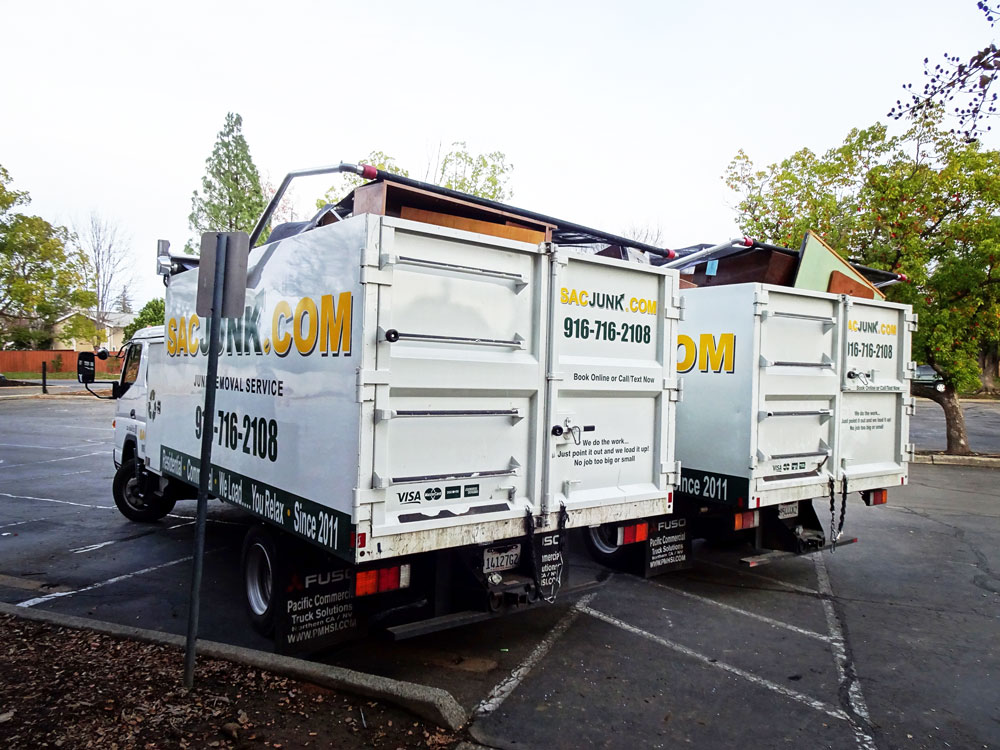
Sac Junk helps Sacramento-area customers remove non-hazardous renovation debris, old fixtures, furniture, appliances, and general clutter without requiring them to do the heavy lifting. After a courtesy call before arrival, the crew reviews the load, gives an upfront quote, and gets to work once the price is approved. Materials that can be donated or recycled are handled responsibly whenever possible.
For a kitchen refresh, bathroom remodel, flooring replacement, or full property turnover, the simplest plan is often to finish the work, make one clear pile of what is leaving, and let a hauling crew take it from there. A clean, open space is when the renovation finally feels complete.