A store can look nearly empty and still take days to clear. Wall shelving, checkout counters, display cases, fitting rooms, stockroom racks, signage, and old back-office furniture are heavy, awkward, and often anchored in place. Professional retail fixture removal clears those leftover pieces quickly so a closing, remodel, lease turnover, or new build-out does not get held up by one more cleanup task.
For Sacramento-area business owners, landlords, property managers, and contractors, the job is rarely just about getting rid of old fixtures. It is about getting access back to the space, protecting floors and walls, keeping a project moving, and avoiding surprise disposal problems. The right removal plan turns a cluttered former store into a usable blank slate.
When retail fixture removal is the right call
Retail fixtures are built to carry weight and survive constant customer use. That makes them harder to remove than standard office furniture. Gondola shelving may be bolted together in long runs. Cash wraps can be wired for power or data. Glass display cases can be fragile and extremely heavy. Slatwall, pegboard, and built-in cabinets may be secured directly to studs or masonry.
A full-service removal crew is especially useful when the store has closed, a tenant has left equipment behind, or a contractor needs the space cleared before demolition or renovation. It also makes sense after a retail redesign, when old displays need to go before new fixtures arrive.
Trying to handle the work in-house can look cheaper at first. But it may require pulling employees off regular duties, renting a truck, finding a legal disposal site, and making several trips. If fixtures are bulky, there is also a real risk of damaged doors, scratched floors, broken glass, or injuries from lifting. For a small amount of lightweight shelving, a store team may be able to handle it. For a full storefront or a tight deadline, professional hauling usually saves more time than it costs.
What can be removed from a retail space
Every store is different, but most non-hazardous fixtures and leftover contents can be loaded and hauled away in one visit. This often includes store shelving, gondolas, retail racks, clothing racks, mannequins, display tables, glass cases, counters, cash wraps, fitting room panels, cabinets, desks, chairs, filing cabinets, and breakroom furniture.
Back rooms often create the biggest surprise. Old inventory racks, boxes, packaging, damaged merchandise, appliances, pallets, and miscellaneous debris can fill more space than the sales floor. A walkthrough helps identify all of it before the crew arrives, including items in storage rooms, loading areas, and dumpster enclosures.
Some items need a separate plan. Paint, chemicals, fuel, certain electronics, fluorescent bulbs, and other hazardous materials may not be accepted in a standard junk removal load. If a fixture is hardwired, connected to plumbing, attached to a fire suppression system, or part of a building’s electrical system, have the appropriate licensed trade disconnect it first. Once the item is safe to remove, the hauling crew can handle the lifting, loading, and cleanup.
Plan the job before the lease deadline
The best time to schedule removal is before the final day of a lease, not after. Landlords may require the tenant to remove all personal property, repair damage, and return keys by a specific date. Leaving fixtures behind can delay deposit returns or create extra charges, especially if the next tenant or contractor is waiting to get in.
Start by separating what stays, what transfers to another location, what can be sold or donated, and what needs to be removed. Clear labels are helpful when different teams are working in the same space. One piece of shelving marked for reuse can easily be hauled away by mistake if the plan is not clear.
Then confirm access. Let the removal crew know about stairs, elevators, narrow hallways, parking restrictions, loading docks, security requirements, and hours when the center allows service vehicles. A downtown storefront with limited loading access needs a different approach than a standalone shop with rear access. These details affect timing, labor, and how efficiently the load can be completed.
Protect the building while fixtures come out
Removal is not demolition. A careful crew should take fixtures apart as needed, move them through the safest route, and sweep up after loading. Still, some fixtures are attached in ways that leave holes, wall marks, or floor anchors behind. Those repairs are usually a separate trade, but knowing what will remain helps you coordinate the next step.
Before work begins, photograph the space and note existing damage. This is useful for lease turnover records and helps avoid confusion later. If there are glass doors, polished concrete, finished wood, or newly renovated surfaces, point them out during the walkthrough. Good crews adjust the removal route and handling method to protect the property.
How a full-service retail fixture removal job works
The process should be straightforward. You schedule a pickup, explain the type of fixtures and approximate amount, and arrange a time that works with your store, property manager, or contractor. On arrival, the crew reviews the items and access conditions, then provides an upfront quote based on how much space the load takes up.
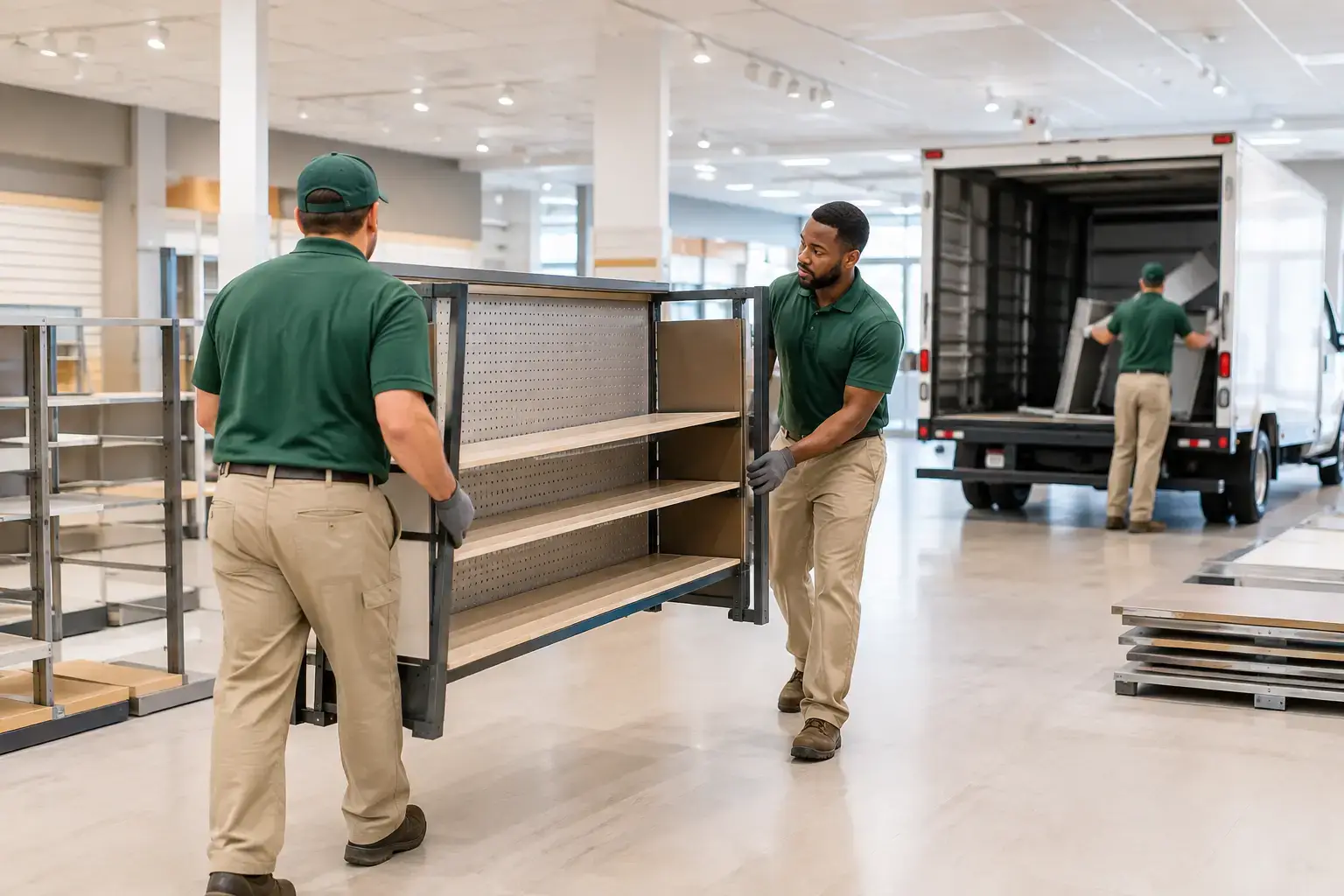
After you approve the price, the crew gets to work. They do the lifting, loading, and hauling, so your staff does not have to wrestle a cash wrap through a doorway or make a dozen runs to the dump. A courtesy call before arrival is also valuable when you are coordinating building access, alarm systems, or a loading dock.
Volume-based pricing is often a practical fit for retail cleanouts because fixture loads vary widely. A few display racks and a desk are very different from an entire boutique’s shelving, counters, and stockroom contents. The final cost depends on the amount of material, labor needed, access challenges, and any special handling requirements. The key is approving the quote on-site before removal starts, rather than discovering added labor charges after the truck is loaded.
Sac Junk provides this kind of labor-inclusive hauling for retail spaces throughout Sacramento and nearby communities, with crews that handle the physical work from pickup through site cleanup.
Keep usable materials out of the landfill when possible
A retail remodel creates a lot of material quickly, and not all of it belongs in a landfill. Metal racks and shelving may be recyclable. Usable desks, chairs, cabinets, and display pieces may have a second life through donation or reuse. Cardboard, pallets, and certain materials from the stockroom can also be separated when conditions allow.
Reuse is not guaranteed. Fixtures that are broken, heavily branded, water-damaged, or missing parts may have limited donation value. It depends on their condition, local receiving options, and the time available to sort them. Still, choosing a removal company that prioritizes donation and recycling can reduce unnecessary waste without creating more work for your team.
If you have valuable fixtures that you want to resell, remove them from the hauling scope before the crew arrives. Selling used fixtures can be worthwhile, but it can also slow down a turnover if buyers do not show up or cannot dismantle the items. When the deadline matters more than recovering a small amount of value, a fast cleanout is often the better business decision.
A cleared store gives the next project room to move
Whether you are handing back a leased retail space, preparing for a new tenant, or replacing an outdated store layout, fixture removal should not become the item that delays everything else. Schedule before the deadline, identify anything requiring special disconnection, and make sure the crew has a clear path to load.
Once the old shelving, counters, racks, and debris are gone, the work ahead becomes simpler. Your contractor can start, your landlord can inspect, or your new fixtures can come in without piles of old equipment standing in the way.